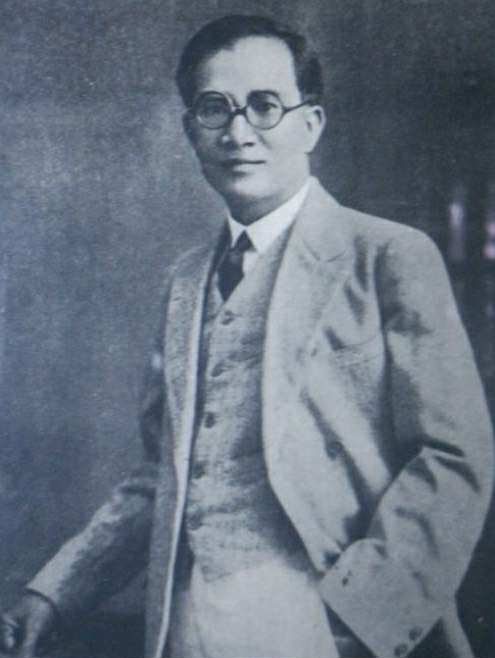
JPL’s Life

José Paciano Laurel

Reghie Pasiola S.
C132 1st year
Final Examination
Subject: JPLN01A
Prof: Ms. Damilig

Biography

March 9, 1891
Born in Tanauan, Batangas
1911
Completed high school at Manila High School
1915
Received law degree from University of the Philippines
1920
Earned J.S.D. from Yale Law School
November 6, 1959
Passed away

Civil Status

Married to Pacencia Hidalgo on April 9, 1911, and had 9 children: Jose B. Laurel Jr., Jose S. Laurel III, Natividad Laurel-Guinto, Sotero Laurel II, Mariano Laurel, Rosenda Laurel-Avanceña, Potenciana Laurel-Yupangco, Salvador Laurel, Arsenio Laurel.

Born

Born on March 9, 1891, in the town of Tanauan, Batangas. His parents were Sotero Laurel y Remoquillo and Jacoba García y Pimentel, both from Tanauan. His father had been an official in the revolutionary government of Emilio Aguinaldo and a signatory to the 1899 Malolos Constitution. Like many other presidents, he was of Chinese mestizo descent. His second given name Paciano was in honor of Paciano Rizal.

Education

Laurel studied at the San Jose College in Tanauan before transferring in 1903 to Colegio de San Juan de Letran in Manila. He later attended "La Regeneracion", where he completed the Spanish secondary course of instruction. In 1907, he finished the intermediate grades at Manila public schools. Laurel completed his high school education at Manila High School in 1911. He received his law degree from the University of the Philippines College of Law in 1915, where he studied under Dean George A. Malcolm, whom he would later succeed at the Supreme Court of the Philippines. In the same year, he took the Philippine bar examination and placed second. He then obtained a Master of Laws degree from the University of Santo Tomas in 1919. Laurel was later awarded a scholarship at Yale Law School, where he obtained his J.S.D. degree in 1920. In the same year, he was admitted to the Bar by the Supreme Court of the United States and the Supreme Court and Court of Appeals of the District of Columbia. He later traveled extensively throughout the United States and Europe, where he also took special courses in international law at Oxford University in England and at the University of Paris in France before returning to the Philippines in 1921. He also earned his Doctorate in Jurisprudence at the Escuela de Derecho in Manila and Humanities at the University of Santo Tomas.

Early Career

Laurel began his life in public service while he was a student. He served as a messenger in the Bureau of Forestry, then as a clerk in the Code Committee tasked with the codification of Philippine laws, and as a law clerk in the Executive Bureau. During his work for the Code Committee, he was introduced to its head, Thomas A. Street, a future Supreme Court Justice who would be a mentor to the young Laurel. In 1921, Laurel was also appointed as a lecturer at University of the Philippines, particularly at the College of Liberal Arts and at the College of Law. Laurel was appointed first as ad interim Undersecretary of the Interior Department in 1922 (with two stints as acting secretary), then promoted as Secretary of the Interior in 1923. In that post, he would frequently clash with the American Governor-General Leonard Wood, and eventually, in 1923, resign from his position together with other Cabinet members in protest of Wood's administration. His clashes with Wood solidified Laurel's nationalist credentials. Laurel was a member of the Philippine fraternity Upsilon Sigma Phi.

Political Career

Senator and Congressman of the Philippines

In 1925, Laurel was elected to the Philippine Senate, beating incumbent Senator Antero Soriano. Serving from the 5th district, he would serve for one term before losing his re-election bid in 1931 to fellow Batangueño Claro M. Recto. He retired to private practice, but by 1934, he was again elected to public office, this time as a delegate to the 1935 Constitutional Convention. Hailed as one of the "Seven Wise Men of the Convention", he would sponsor the provisions of the Bill of Rights. Following the ratification of the 1935 Constitution and the establishment of the Commonwealth of the Philippines, Laurel was appointed Associate Justice of the Supreme Court on February 29, 1936.

Associate Justice of the Supreme Court

Laurel's Supreme Court tenure may have been overshadowed by his presidency, yet he remains one of the most important Supreme Court justices in Philippine history. He authored several leading cases still analyzed to this day that defined the parameters of the branches of government as well as their powers. Angara v. Electoral Commission, 63 Phil. 139 (1936), which is considered as the Philippine equivalent of Marbury v. Madison, 5 U.S. (1 Cranch) 137 (1803), is Laurel's most important contribution to jurisprudence and even the rule of law in the Philippines. In affirming that the Court had jurisdiction to review the rulings of the Electoral Commission organized under the National Assembly, the Court, through Justice Laurel's opinion, firmly entrenched the power of Philippine courts to engage in judicial review of the acts of the other branches of government, and to interpret the Constitution. Another highly influential decision penned by Laurel was Ang Tibay v. CIR, 69 Phil. 635 (1940). The Court acknowledged in that case that the substantive and procedural requirements before proceedings in administrative agencies, such as labor relations courts, were more flexible than those in judicial proceedings. At the same time, the Court still asserted that the right to due process of law must be observed and enumerated the "cardinal primary rights" that must be respected in administrative proceedings. Since then, these "cardinal primary rights" have stood as the standard in testing due process claims in administrative cases.

Cabinet Member and Accession

As he was well known to the Japanese as a critic of US rule, as well as having demonstrated a willingness to serve under the Japanese Military Administration, he held a series of high posts in 1942–1943. On December 10, 1941, then-Associate Justice Laurel was appointed by President Manuel L. Quezon as acting Secretary of Justice. He was later appointed Commissioner of Justice by the commander-in-chief of the Imperial Japanese Forces on January 26, 1942, but was effective three days prior. However, on December 2, 1942, he was relieved from the post to become the Minister of the Interior, a position that he had previously held as Secretary two decades prior. He relinquished the post on October 14, 1943, when he was inaugurated President of the Second Philippine Republic.

Presidency

The presidency of Laurel understandably remains one of the most controversial in Philippine history. After the war, he would be denounced as a war collaborator and even a traitor, although his indictment for treason was superseded by President Roxas' Amnesty Proclamation. When Japan invaded, President Manuel L. Quezon first fled to Bataan and then to the United States to establish a government-in-exile. Quezon ordered Laurel, Vargas and other cabinet members to stay. Laurel's prewar, close relationship with Japanese officials (a son had been sent to study at the Imperial Japanese Army Academy in Tokyo, and Laurel had received an honorary doctorate from Tokyo Imperial University) in 1938, placed him in a good position to interact with the Japanese occupation forces. Under vigorous Japanese influence, the National Assembly selected Laurel to serve as president in 1943. He took the oath of office on October 14, 1943, at the Legislative Building (now the National Museum of Fine Arts) in Manila. The oath was administered by Chief Justice José Yulo.

Contributions

Following the Japanese attack on Pearl Harbor, Hawaii (December 1941), and the subsequent Japanese assault on the Philippines, Laurel stayed in Manila; President Manuel Quezon had escaped, first to the Bataan Peninsula and then to the United States. Laurel offered his services to the Japanese, and, because of his criticism of U.S. rule of the Philippines, he held a series of high posts in 1942–43, climaxing in his selection as president in 1943. Twice in that year he was shot by Philippine guerrillas, but each time he recovered. In July 1946 he was charged with dozens of counts of treason, but he never stood trial; he shared in a general amnesty declared by President Manuel Roxas in April 1948. Laurel was the Nationalist Party’s nominee for the presidency of the Republic of the Philippines in 1949, but he was narrowly defeated by the incumbent president, Elpidio Quirino, the nominee of the Liberal Party. Elected to the Senate in 1951, Laurel helped to persuade Ramon Magsaysay, then secretary of defense, to desert the Liberals and join the Nationalists. When Magsaysay became president, Laurel headed an economic mission that in 1955 negotiated an agreement to improve economic relations with the United States. He retired from public life in 1957.

LPU History

Lyceum of the Philippines University prides itself with its long and rich tradition of Academic excellence through the legacy of its founder, Dr. Jose P. Laurel. The only Philippine President to have served in all three branches of the Government, Dr. Laurel was a successful lawyer, legislator, constitutionalist, jurist, writer, scholar, statesman, philosopher, and above all things, an educator. Dr. Laurel’s concern for education was his most abiding passion. A graduate of top educational institutions such as University of the Philippines College of Law, Escuela de Derecho, University of Santo Tomas and Yale University, his credentials as an educator were unassailable. He wrote extensively on education and managed to teach in several educational institutions in Manila, despite his numerous commitments. During the Second World War, as the leader of the nation during its darkest period in its history, he introduced educational policies that emphasized and upheld national morale and character.

The inspiration to establish a school came to him in the early 1920’s while a student at Yale. Three decades later, along with some of his close friends, he turned this dream into a reality. With the aim of becoming a center of academic excellence in the Philippines and the Far East, Lyceum of the Philippines University (as it is now known) formally opened its doors to the public on July 7, 1952. With his admiration for knowledge and his appreciation of classical thought, Dr. Laurel named the school Lyceum of the Philippines after Lykeios, the site in ancient Athens where the great Philosopher Aristotle nurtured the minds of his protegees. The school’s motto, “Veritas et Fortitudo”, “Pro Deo et Patria”, reflects Dr. Laurel’s belief in the value of learning and character formation for God and country.

Unfortunately, Dr. Laurel unexpectedly died in 1959. On his third son Sotero, who was then in the practice of law, fell the mantle of responsibility of running the school. He was the natural choice as, in years earlier, it was Senator Sotero who helped his father organize LPU and acted as the first executive secretary to his father. For the next forty-three years, it was this chosen son, Sotero, who nurtured the school and made it grow beyond Manila into the provinces. In 1966, he founded the Lyceum of the Philippines University-Batangas followed by Lyceum of the Philippines-Laguna in 2000. Both campuses are now headed by Senator Laurel’s fourth son Dr. Peter P. Laurel. In 2008, another campus in Cavite was established to bring the total number of LPU campuses to five with a grand total enrollment of approximately 37,000 students, about 15,000 of whom are enrolled in various hospitality courses. Senator Laurel’s eldest son, Atty. Roberto P. Laurel, heads the Manila, Makati and Cavite campuses. In 2019, LPU Davao will start operations headed by Dr. Peter P. Laurel.

LPU Campuses

  • LPU Manila
  • LPU Makati
  • LPU Cavite
  • LPU Batangas
  • LPU Laguna
  • LPU Davao